Symposium on biomarker-driven CNS drug development in honour of Prof Joop van Gerven
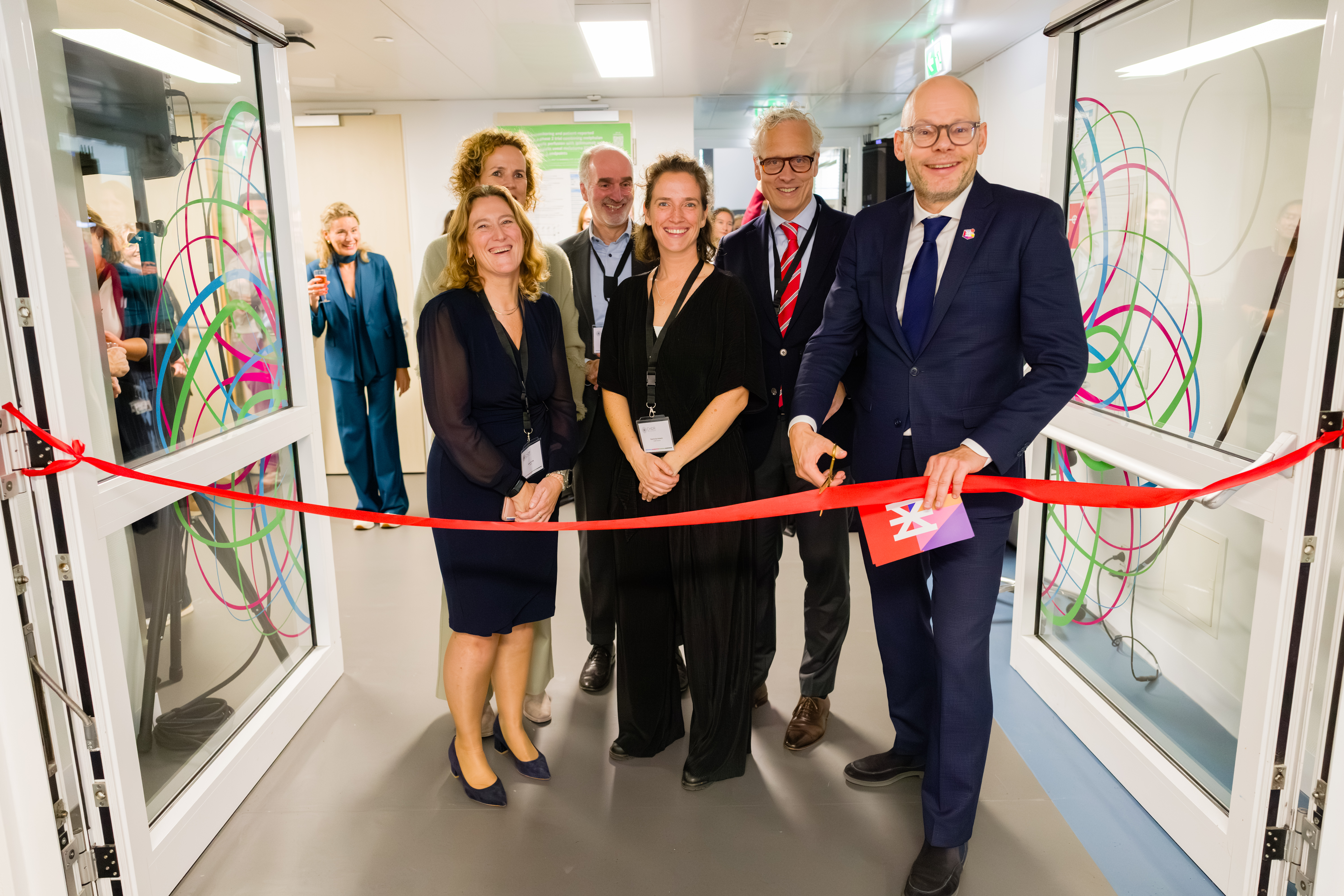
On 17 November 2025, CHDR bade farewell to Prof Joop van Gerven as Research Director CNS with a symposium on biomarker-driven CNS drug development.
In 1994, neurologist Dr Joop van Gerven joined CHDR to lead early clinical research into CNS drugs. His work at CHDR was fundamental to the development of the NeuroCart® CNS test battery. As the NeuroCart was integrated into CHDR studies on many novel and conventional drugs over time, an extensive database was compiled with pharmacodynamic ‘fingerprints’ of a wide variety of substances, with diverse mechanisms of action.
In addition to the NeuroCart, Van Gerven developed pharmacological challenge models to mimic aspects of neuropsychiatric disease in healthy study participants. This allowed CHDR to deliver proof of pharmacological mechanism in the early stages of clinical development of many novel compounds. Van Gerven also pioneered the use of methods such as resting-state fMRI and EEG as informative pharmacodynamic biomarkers in early drug development. From 2011 onwards, he devoted an increasing amount of his time to the CCMO (Central Committee on Research Involving Human Subjects), the Dutch competent trial authority and the central authority for medical ethics in the Netherlands. Van Gerven chaired the CCMO from 2016 to 1 July 2025. During those years, he remained involved in CHDR’s CNS work. On Monday 17 November, he gave his valedictory lecture as professor of Clinical Neuropsychopharmacology at Leiden University. In this lecture, entitled ‘The Kaleidoscopic Brain’, he reflected on his work as a clinical pharmacologist in the development of CNS drugs in the course of more than three decades at CHDR. On the afternoon before his farewell lecture, CHDR organised a symposium for him entitled ‘The future of rational biomarker-driven CNS drug development - from druggable targets to true effectiveness’.
Varied symposium
The symposium, chaired by Dr Gabriël Jacobs, Research Director Psychiatry, provided a multifaceted picture of biomarker-driven strategies facilitating rational CNS drug development. The symposium showcased the most innovative contributions of Van Gerven to CHDR’s research over the last 35 years, and how these strategies could facilitate rational CNS drug development in the next decade.
Dr Ajay Verma (Twilight Bioscience) highlighted the transition from the historical approach, mainly based on serendipity and observation, to advanced, circuit-based target identification and validation.
The application of brain network and connectivity-based biomarkers was the focus of the next two lectures. Dr Jules Heuberger (Clinical Pharmacology Consultant at Curare and former head of CHDR’s Experimental Medicine group) described the importance of measures for cortical excitability and the use of transcranial magnetic stimulation as a potential biomarker in CNS drug development. Prof Serge Rombouts (Cognitive Neuroimaging at the Radiology Department of Leiden University Medical Centre) elaborated on his longstanding collaboration with Joop van Gerven, developing and validating resting state fMRI as a method for demonstrating drug effects as a tool in early drug development.
Functional CNS biomarkers were the subject of presentations by two CHDR staff members: Dr Laura Borghans focused on the application of NeuroCart® and NeuroKit®, and Soma Makai-Bölöni spoke about the development of new functional biomarkers for neurobehavioural functions relevant to psychiatry such as reward processing and cognitive flexibility. Both projects are closely intertwined with the daily work of CHDR, particularly the Psychiatry Group.
Interested in learning more?
More articles from 2025 stories